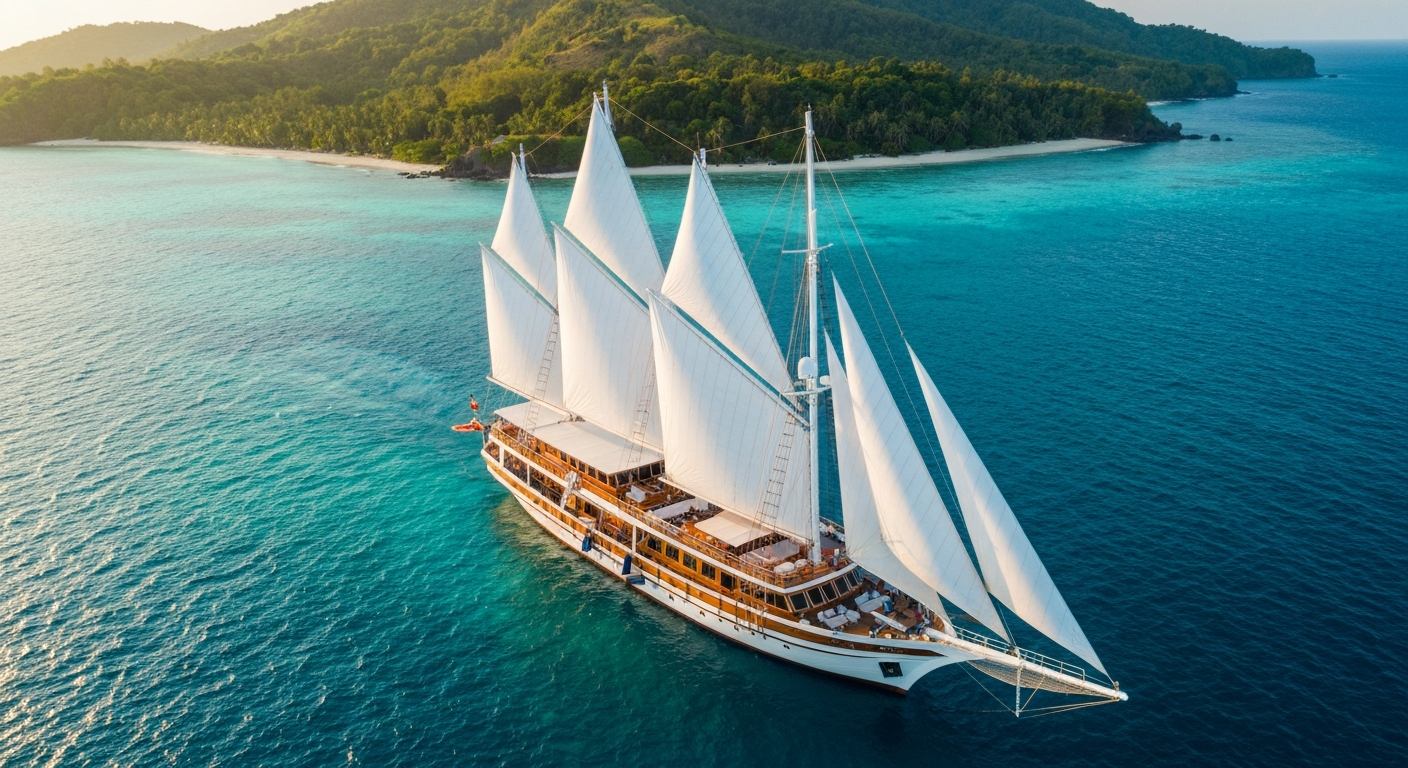
Bali’s marine environment supports a significant population of manta rays, drawing considerable interest from both marine conservationists and luxury charter clients. Manta ray season in the Nusa Penida region typically spans from April to October, aligning with Bali’s dry season. During this period, sea conditions offer optimal visibility and plankton concentrations, increasing sighting probabilities to over 85% at established cleaning stations. These majestic creatures, primarily reef mantas (Mobula alfredi) reaching wingspans of 5 meters, frequent sites like Manta Point and Manta Bay. For those considering a Bali catamaran charter or ownership, understanding these seasonal patterns is crucial for planning exclusive marine encounters. The Indonesian government, through initiatives by the Ministry of Marine Affairs and Fisheries, declared the entire Indonesian Exclusive Economic Zone a manta ray sanctuary in 2014, protecting both reef and oceanic manta species. This designation supports a thriving eco-tourism sector contributing an estimated $15 million annually to the local economy, as reported by conservation groups like Manta Trust.
Understanding Bali’s Manta Ray Seasonality
Manta ray sightings around Bali are most consistent during the dry season, from April through October. This period coincides with cooler ocean currents bringing nutrient-rich waters to the Nusa Penida area, attracting plankton, the manta’s primary food source. Peak months for encounters are often June to September, when water temperatures average 26-28°C and underwater visibility extends up to 20-30 meters. During the wet season, from November to March, increased rainfall can reduce visibility and make sea conditions less predictable, lowering sighting probabilities to around 60% at key locations. Experienced operators plan routes considering these seasonal shifts, offering higher success rates for private Nusa Penida catamaran tours.
Key Manta Ray Habitats Near Bali
The primary manta ray habitats accessible from Bali are located around Nusa Penida, an island situated approximately 20 kilometers southeast of Bali’s mainland. Manta Point, on Nusa Penida’s southwestern coast, is a renowned cleaning station where mantas gather for smaller fish to remove parasites. Manta Bay, a shallower site, serves as a feeding ground and often provides easier snorkeling opportunities. Both locations are within a 1.5 to 2-hour cruising range from major Bali departure points such as Benoa or Sanur. Access to these sites by private catamaran allows for flexible scheduling and reduced crowding compared to larger tour boats, enhancing the viewing experience for groups of 6-12 guests.
The Two Manta Species of Bali Waters
Bali’s waters host two distinct manta ray species: the reef manta (Mobula alfredi) and the oceanic manta (Mobula birostris). Reef mantas are more commonly observed, with individuals reaching wingspans up to 5.5 meters and weighing over 700 kilograms. They typically inhabit coastal waters and can be found at Manta Point throughout the year, with seasonal peaks. Oceanic mantas, larger and more elusive with wingspans up to 7 meters and weights exceeding 1,350 kilograms, prefer open ocean environments. While less frequent, sightings of oceanic mantas occur, particularly during migrations. Both species are listed as Vulnerable by the IUCN Red List, emphasizing the importance of responsible tourism and conservation efforts in the region, as outlined by [Indonesia.travel on Manta Ray Conservation](https://www.indonesia.travel/gb/en/destinations/bali-nusa-tenggara/bali/manta-ray-conservation).
Maximizing Your Manta Ray Sighting Probability
Successful manta ray encounters depend on several factors beyond just seasonality. Optimal viewing times are generally mid-morning to early afternoon, between 9:00 AM and 2:00 PM, when sunlight penetrates the water best. Choosing a private catamaran offers the flexibility to arrive at sites before peak crowds, improving chances for unhindered observation. Experienced captains monitor local currents and tidal conditions, which influence manta behavior and plankton distribution. For example, incoming tides often bring clearer water and more food. Booking a multi-day charter also significantly increases encounter probability, allowing for repeat visits to key locations under varying conditions. A luxury catamaran charter in Bali typically includes a knowledgeable crew who understand these nuances.
Responsible Manta Ray Interaction Guidelines
Adhering to responsible interaction guidelines is paramount for protecting Bali’s manta ray populations and ensuring sustainable tourism. Divers and snorkelers must maintain a minimum distance of 3 meters from mantas to avoid disturbing their natural behavior. Touching mantas, chasing them, or blocking their path is strictly prohibited. Flash photography should be avoided underwater as it can disorient the animals. Catamaran operators and their crews receive training on these protocols, ensuring guests are briefed before entering the water. Waste disposal practices are also critical; all refuse must be stored securely onboard and disposed of properly on land. These guidelines are enforced by local marine authorities, aligning with international standards for marine wildlife tourism, often supported by organizations like [WWF Indonesia](https://www.wwf.id/).
Catamaran Advantages for Manta Ray Expeditions
Owning or chartering a Bali catamaran provides distinct advantages for manta ray expeditions. Catamarans offer superior stability, reducing seasickness for guests during transits to Nusa Penida, which can involve open ocean swells. Their shallow draft allows access to bays and coves inaccessible to monohull yachts, providing closer proximity to manta habitats. The expansive deck space and comfortable amenities, including multiple cabins and shaded areas, enhance the experience for groups ranging from couples to corporate retreats of up to 20 guests. Furthermore, a private catamaran allows for customized itineraries, enabling guests to spend more time at Manta Point or Manta Bay, combined with other activities like snorkeling, stand-up paddleboarding, or gourmet dining onboard. This flexibility is a key driver for clients seeking a Bali 5.4 for sale in Indonesia for charter operations.
Planning Your Manta Ray Expedition from Bali
Planning a successful manta ray expedition requires consideration of several factors to optimize your experience:
- **Best Season:** Target April to October for highest sighting probabilities.
- **Departure Point:** Benoa Harbour or Sanur offer efficient access to Nusa Penida, approximately 1.5 hours by catamaran.
- **Charter Duration:** A full-day private charter (8-10 hours) allows ample time at manta sites and other Nusa Penida attractions.
- **Group Size:** Catamarans typically accommodate 6-12 guests comfortably for snorkeling activities, with larger vessels suitable for up to 40 for events.
- **Crew Expertise:** Ensure your chosen catamaran comes with an experienced captain and crew knowledgeable about manta behavior and local currents.
- **Inclusions:** Confirm the charter package includes high-quality snorkeling gear, fresh towels, and a comprehensive lunch with beverages.
- **Safety Protocols:** Verify the vessel’s safety equipment, communication systems, and crew training for marine emergencies.
- **Conservation Briefing:** Expect a pre-departure briefing on responsible interaction guidelines for marine life.
- **Booking Lead Time:** During peak season (June-September), book private charters 3-6 months in advance to secure preferred dates and vessels.
For those considering a Bali catamaran for sale, the potential for operating profitable manta ray charters is significant. A mid-range used Bali catamaran, priced from $450,000 to $850,000 USD, can generate substantial charter revenue, particularly when offering premium experiences to groups of 8-12 guests. Daily charter rates for a private Nusa Penida itinerary range from $1,000 to $2,500 USD, covering fuel, crew, and catering. Understanding the specific market demand for manta ray encounters can inform acquisition decisions and operational strategies, leveraging Bali’s unique marine tourism appeal.