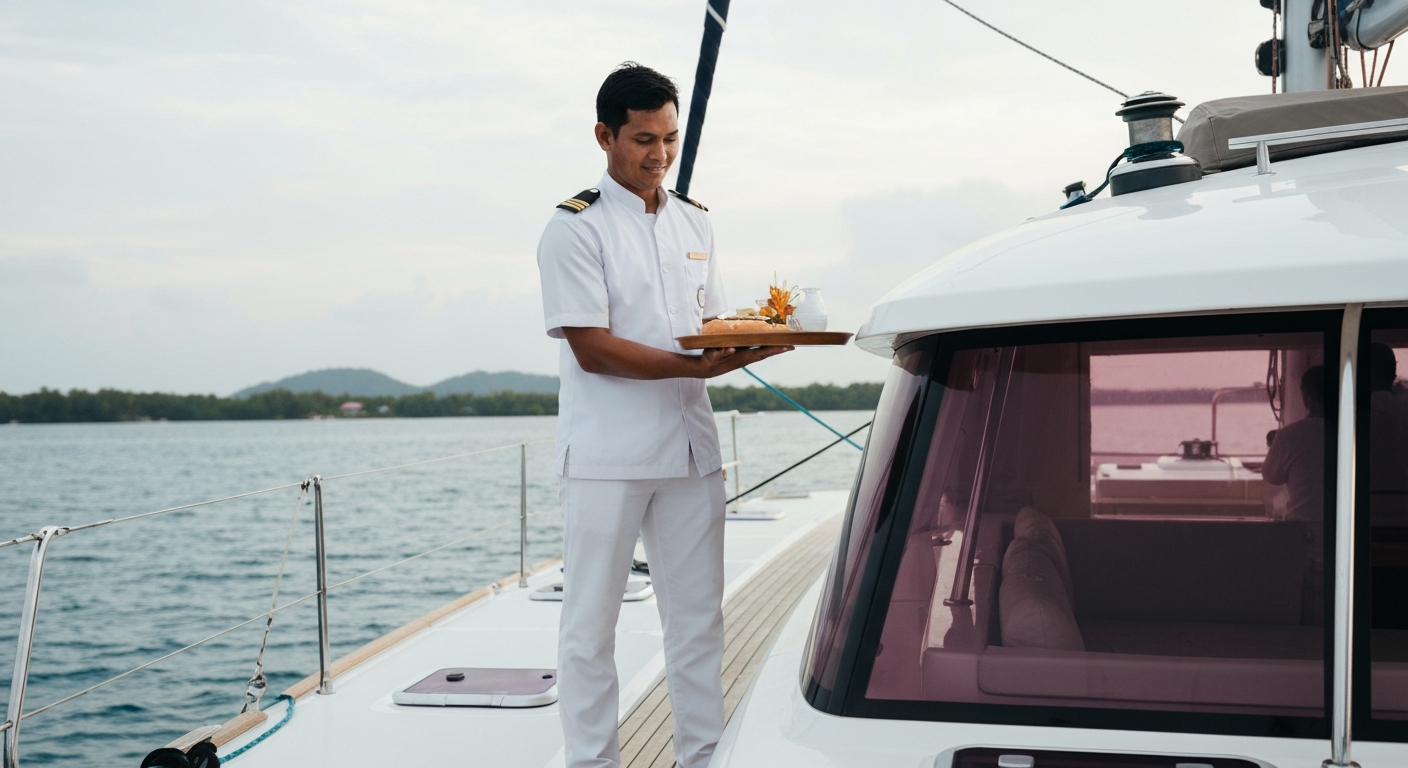
The acquisition of any vessel, particularly a catamaran intended for operation in a dynamic region such as Bali, necessitates a rigorous examination of crew certifications and established safety protocols. These elements directly influence a vessel’s operational integrity, insurance viability, and long-term resale value. For instance, vessels with fully certified crews often command a 10-15% premium in the brokerage market due to their documented compliance and reduced operational risk. Indonesian maritime law, specifically through regulations enforced by the Directorate General of Sea Transportation, mandates specific training and licensing for all commercial vessel operators within its territorial waters [Indonesian Maritime Law](https://jdih.maritim.go.id/peraturan-perundang-undangan/undang-undang). This ensures that any Bali catamaran for sale, whether new or used, meets stringent operational safety benchmarks crucial for both passenger and crew welfare.
International Maritime Standards and Local Compliance
International maritime operations are governed by a complex framework of conventions and regulations, primarily the International Maritime Organization (IMO) standards. The International Convention on Standards of Training, Certification and Watchkeeping for Seafarers (STCW) is a cornerstone of this framework [IMO](https://www.imo.org/en/OurWork/HumanElement/Pages/STCW-Convention.aspx). This convention dictates minimum qualification standards for masters, officers, and watch personnel on seagoing merchant ships, including commercial catamarans. Locally, the Indonesian Ministry of Transportation, through its Directorate General of Sea Transportation, implements national laws that align with these international benchmarks. For example, all commercial vessels operating in Indonesian waters, including those based in Bali, must adhere to specific safety equipment requirements, with annual inspections confirming compliance. These inspections verify the presence and functionality of life rafts, fire suppression systems, and navigation equipment, typically requiring certification renewals every 12 months.
Essential Crew Certifications for Bali Catamarans
A professional crew operating a Bali catamaran possesses a range of specific certifications, each vital for safe and efficient operations. The Captain, for instance, typically holds a Master 200GT (Gross Tonnage) license, permitting command of vessels up to 200 tons in designated coastal waters, with renewals required every five years. Engineers often carry an Engineer Officer of the Watch (EOOW) certificate or a local equivalent, ensuring proficiency in engine maintenance, troubleshooting, and system management for diesel engines ranging from 500kW to 3000kW. Deckhands and stewards are universally required to complete STCW Basic Safety Training, which covers personal survival techniques, fire prevention and firefighting, elementary first aid, and personal safety and social responsibilities. This foundational training is mandatory for all seafarers and is typically renewed every 60 months. Specialized roles, such as onboard chefs, may also hold hygiene and food safety certifications, crucial for preventing foodborne illnesses on charters serving up to 40 guests.
Safety Protocols and Emergency Preparedness
Robust safety protocols form the backbone of responsible catamaran operations in Bali. Regular emergency drills are conducted monthly, simulating scenarios such as man overboard, fire on board, and abandon ship procedures. These drills involve all crew members and are documented for audit purposes, ensuring proficiency and rapid response times within a 10-minute window for critical incidents. Vessels carry comprehensive medical kits, often exceeding standard first aid requirements, and at least two crew members hold advanced first aid and CPR certifications, renewed biennially. Life rafts, sized to accommodate 150% of the vessel’s maximum passenger capacity, undergo servicing every 12 months at certified stations. Communication equipment, including VHF radios and satellite phones, is tested daily, maintaining constant contact with shore bases within a 50-nautical-mile operational range. These measures ensure that any Bali catamaran for sale represents a secure investment, ready for immediate, safe operation.
Maintenance and Vessel Integrity Checks
The physical integrity of a Bali catamaran is paramount to its safety and longevity, directly impacting its market value. All commercial catamarans undergo scheduled dry-docking every 2-3 years for comprehensive hull inspections, anti-fouling application, and rudder/propeller servicing. Engines receive routine maintenance every 250 engine hours, including oil changes, filter replacements, and system checks, adhering to manufacturer specifications for optimal performance and fuel efficiency. Rigging inspections, covering mast, sails, and all standing and running rigging, occur annually, with major overhauls every 5-7 years to prevent structural failures. Furthermore, electrical systems, including navigation lights, bilge pumps, and communication arrays, are checked quarterly for functionality and compliance with Indonesian maritime regulations. A vessel with a meticulously maintained service history, evidenced by detailed logbooks, offers transparency and reassurance to prospective buyers of a Bali catamaran for sale, often increasing its appraised value by 8-12%.
Environmental Stewardship and Responsible Operations
Operating a catamaran in Bali involves a critical responsibility towards the region’s sensitive marine ecosystems. The Indonesian Ministry of Marine Affairs and Fisheries actively promotes sustainable tourism practices, particularly in protected areas like the Nusa Penida Marine Protected Area [Kemenparekraf](https://www.kemenparekraf.go.id/ragam-pariwisata/wisata-bahari). Catamaran crews are trained in strict waste management protocols, ensuring all non-biodegradable waste is sorted and returned to shore for proper disposal, with no discharge permitted within 12 nautical miles of the coast. Anchoring procedures adhere to guidelines that protect coral reefs, utilizing designated mooring buoys where available or dropping anchor in sandy areas away from fragile ecosystems. Fueling operations follow stringent spill prevention measures, and the use of eco-friendly cleaning products is encouraged. Vessels often participate in local marine conservation initiatives, reinforcing their commitment to preserving Bali’s natural beauty, a significant draw for the up to 2.5 million tourists visiting the island annually [Indonesia.travel](https://www.indonesia.travel/gb/en/home). This commitment enhances the vessel’s reputation and operational value.
The Value of Certified Crews in a Bali Catamaran Purchase
When considering a Bali catamaran for sale, the quality and certification of its crew significantly influence the vessel’s overall desirability and operational potential. A well-trained, certified crew ensures adherence to international and local maritime laws, minimizing legal liabilities and insurance risks. This translates into lower insurance premiums, potentially saving owners 5-10% annually on comprehensive policies. Furthermore, a proficient crew can maximize a catamaran’s charter revenue potential by providing exceptional service, leading to higher client satisfaction and repeat bookings, especially for private charters fetching $1,000-$2,500 per day. Crew expertise also extends to efficient vessel management, reducing wear and tear, and extending the lifespan of critical components. For buyers looking to operate a vessel in the lucrative Bali charter market or for private use, a history of professional crew management ensures peace of mind and a more seamless transition of ownership. This factor becomes particularly important for premium vessels, where crew professionalism directly impacts the luxury experience offered.
Key Elements of Catamaran Crew Standards and Safety:
- Mandatory STCW Basic Safety Training for all seafarers, renewed every 5 years.
- Captain’s license (e.g., Master 200GT) appropriate for vessel size and operational area.
- Engineer certifications ensuring proficiency in vessel propulsion and auxiliary systems.
- Regular emergency drills (monthly) covering fire, man overboard, and abandon ship scenarios.
- Comprehensive first aid and CPR training for at least two crew members, renewed biennially.
- Annual servicing and certification of life rafts and other essential safety equipment.
- Strict adherence to Indonesian maritime regulations for vessel registration and operation.
- Implementation of eco-friendly waste management and anchoring protocols.
- Daily checks of navigation, communication, and safety equipment.
- Detailed maintenance logs for engines, hull, and rigging, documenting all service intervals.
- Compliance with international maritime conventions like SOLAS (Safety of Life at Sea).
Understanding the stringent requirements for crew certifications and safety protocols is paramount for any prospective buyer of a Bali catamaran for sale. These standards protect passengers, crew, and the environment, while also safeguarding the significant investment in the vessel itself. A catamaran with a documented history of certified crew and rigorous safety compliance offers superior operational readiness and a more attractive asset. This diligence ensures that your vessel will not only navigate Bali’s stunning waters safely but also comply with all regulatory frameworks, whether for private enjoyment or as a valuable asset in the thriving Bali charter market. We invite serious buyers to explore our current listings and discuss the specific safety profiles of our available Bali 4.2 for sale vessels. Contact us today to learn more about ensuring your next acquisition meets the highest standards of maritime safety and crew excellence.